

01
Assess readiness
We interview leadership, survey the team, and review the tools and workflows where AI could create meaningful leverage.
01 · The 2-Week Workforce Assessment
in hidden pricing variance surfaced in a single AI audit
software + staffing costs saved by a single system
custom builds vs. agency dev time



Trusted by
Global and growing brands


ASICS North America
Client perspective
“I now feel ready to lead my team through what is sure to be the most transformational technology to ever impact knowledge workers.”
Paul Ljucovic · CFO, ASICS North America
What we do
We enable the teams of 7- and 8-figure consumer brands to use AI on their actual workflows, so the seats you’re already paying for turn into shipped work.
Every engagement starts with a person-by-person Workforce Assessment and ends with a trained team and a 90-day plan for what to implement next.
02 · The problem
Growing companies do not need more AI hype. They need a clear assessment of where AI fits, what to train first, and which workflows are worth implementing in the next 90 days.
Your team is experimenting in pockets. Leadership knows AI matters. But there is no clear plan, no internal owner, and no agreement on what should change first.
Follow-ups, reports, handoffs, customer answers, internal updates, and data entry still move through people who should be focused on higher-value work.
Buying another AI tool is easy. Getting a nontechnical team to use AI safely, consistently, and in workflows that matter is the hard part.
The best opportunities are buried in everyday operations. Until someone maps them, AI stays abstract: exciting, urgent, and hard to justify.
03 · Our approach
Three decisions, made in sequence. Each step leaves leadership with something concrete enough to use.
We interview leadership, survey the team, and review the tools and workflows where AI could create meaningful leverage.

We prioritize the highest-value use cases, deliver a 90-day roadmap, and train the team on practical workflows for their actual roles.

If the roadmap makes sense, we help install the assistants, automations, dashboards, and operating workflows behind it.
04 · What changes
Not another AI deck. A shared point of view, a trained team, and a practical sequence for what happens next.
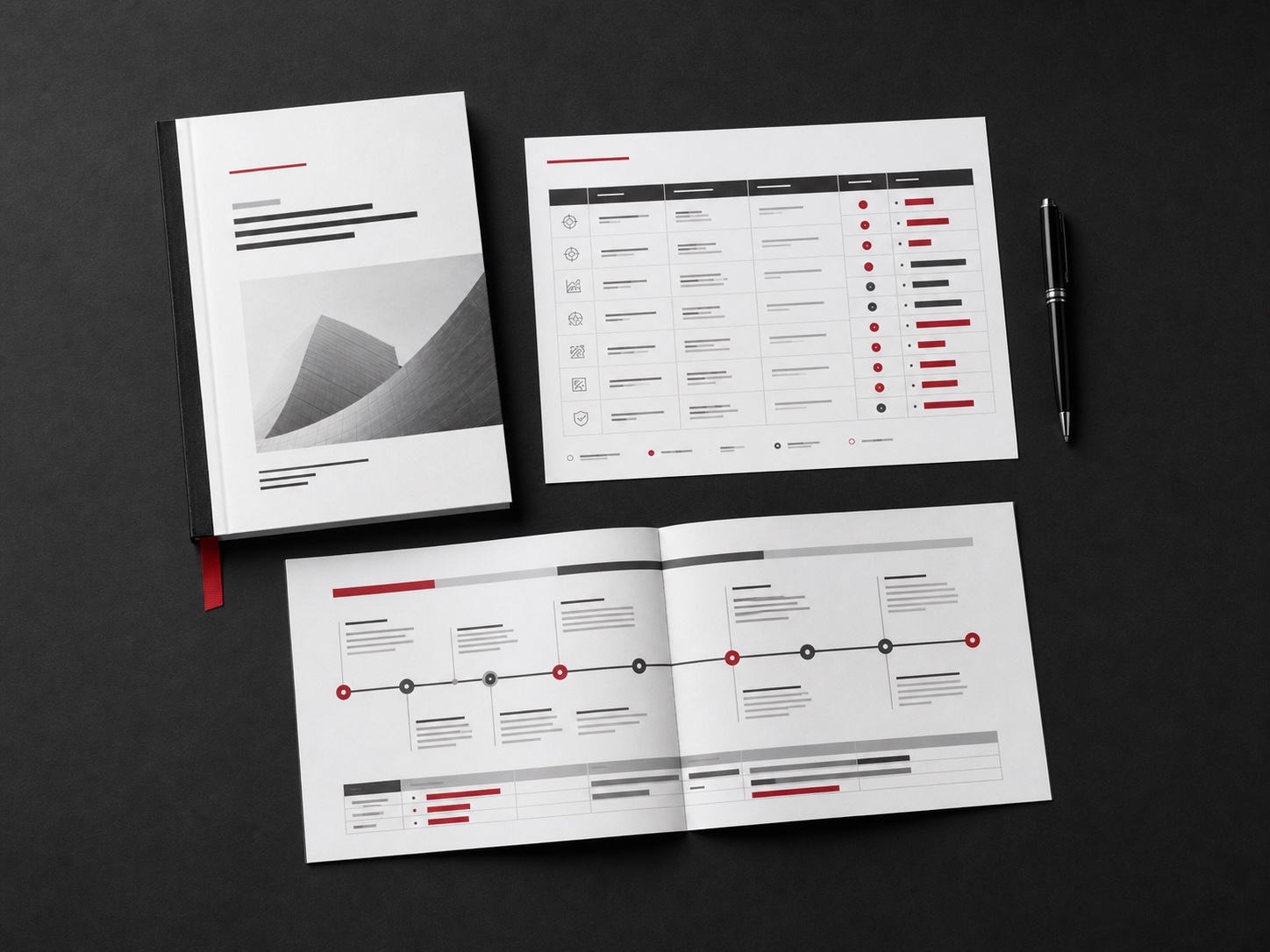
Assessment deliverables
A plan the team can actually run.
Leadership knows which AI use cases are worth acting on first.
The team has shared rules for using AI safely and consistently.
Operators leave training with workflows they can use the next day.
The next implementation phase is scoped around business impact, not novelty.
Then implementation becomes a decision, not a guess.
05 · Results
in software and staffing costs saved by a single system
“I'm gonna get rid of [the tools]. Why use them? It just doesn't make any more sense.”
Founder, a digital marketing agencySee the case study →
in hidden pricing variance surfaced in a single AI audit
“What impressed me most about working with TitanStack AI wasn't just the technology, it was how they operated as an extension of our team…”
Kevin Sherlock, Executive Chairman, Supply LogicSee the case study →
custom builds delivered in a fraction of agency dev time
“They told me five weeks… it took about an hour total. Everything was done.”
CTO, a capital firmSee the case study →
06 · Client case study
Supply Logic
What impressed me most about working with TitanStack AI wasn't just the technology, it was how they operated as an extension of our team… They didn’t just clean our data; they built a pipeline that understood the logic of our business across 12 interconnected systems, then handed us a clear, prioritized path forward instead of a black box. Finding over $115,000 in pricing variance almost as a byproduct tells you everything about the depth of the work. This is what we look for in an AI strategic partner: judgment, not just automation.
07 · AI education
The goal is not dependence on an expert. It is giving people enough understanding to move faster, troubleshoot confidently, and keep building on their own.
In my industry, everyone is talking about AI, but very few people are actually explaining how they use it practically. I found myself struggling to understand what people were really using AI for, what all the terminology meant, and how any of it applied to real workflows. Terms like “agentic AI” and replacing long-standing processes were more noise than substance…
I’m now much faster at getting the AI to work for me, I understand how the systems fit together, and I can diagnose and fix issues on my own, something I couldn’t do before. It probably would have taken me a year of trial and error to get here…
My biggest breakthrough was building agents and sub-agents and actually seeing them work end-to-end. After a lot of frustration trying to piece things together myself, having Max guide me through it and watching it all click was amazing…
If you’re looking for someone who can cut through the noise, help you think through your workflows, and guide you while still letting you learn and grow, Max is incredibly effective. He doesn’t just talk about AI. He helps you actually use it.
Jake Gardner
CEO, SplashBay Media
08 · Why teams trust us
The assessment stands on its own: where the company is today, where AI is most likely to pay off, and what the next 90 days should look like.
AI adoption fails when tools arrive before habits. We teach the team enough to make the roadmap real, not just interesting.
When we build, we build from the assessment: the workflows, systems, and enablement gaps that leadership has already seen and prioritized.
09 · Free AI Readiness Assessment
Answer 24 questions about how your company leads, operates, and uses information. In about five minutes, you’ll get an immediate readiness score and a clearer view of what should happen next.
24 questions · about 5 minutes · immediate score
What you get
Free
A clear score showing where the company stands today.
See where leadership, workflows, data, and enablement are strong or exposed.
Leave with a sharper view of what to fix first and where AI can create leverage.
Sample signal view
10 · Before you commit
What the assessment asks of your team, what happens afterward, and how your information is handled.
The assessment is designed to fit around normal work. Most participants complete a short readiness survey and join the practical training. A smaller leadership group handles kickoff, workflow review and the executive readout. The exact schedule is agreed before kickoff based on team size and scope.
Yes, when the business has enough operational complexity for AI to matter. Team size matters less than repeated manual work, scattered systems and expensive handoffs. The scope and number of participants are adjusted to fit the company.
TitanStack leads the training and ties it directly to the workflows and opportunities uncovered during the assessment. The sessions use practical examples from your team’s work rather than a generic AI curriculum.
With assessment, strategy and training. Most teams do not need another tool first; they need to know where AI will create leverage, what the team can safely use now, and which workflows are worth implementing next.
Growing companies with manual work across sales, operations, customer service, reporting or admin and no mature AI or automation function. The strongest fit is active lifestyle, wellness, apparel, ecommerce, retail and consumer-product teams.
You keep the roadmap either way. If the priorities are clear, TitanStack can help implement the systems: AI assistants, Slack/email/CRM workflows, reporting automation, dashboards, governance and ongoing enablement.
We’ll compare notes and see whether a 2-week assessment makes sense.